
Homehealthy mindDangers of Assertiveness Training: How to Have Healthy Interactions When You Feel Intimidated
Dangers of Assertiveness Training: How to Have Healthy Interactions When You Feel Intimidated
-
By
-
August 26, 2025
Shouldn’t we stand up to people who throw insults and other garbage at us?
Honestly, I don’t worry too much about people throwing garbage at me. Maybe that sounds strange, but I suppose it’s because I don’t see it as garbage. When someone lashes out, something has been triggered in them. There’s a reason behind their reaction—something deeper. I actually see it as an opportunity to get closer to them. This has been one of the most empowering concepts of my entire life.
Now don’t get me wrong—I understand that some people are just mean, selfish, or rude. Heck, not just some—probably most people, at some point or another, act out of selfishness. But that doesn’t have to affect me. I don’t have to take it in or take it personally, it’s about them not me. Maybe you believe this too: that we don’t have to let someone else’s bad behavior define our emotional state, or maybe not. If you don’t, I hope you’ll at least let me explain why I believe this later in this article.
When we think of others taking trash about us, we often think of “assertiveness training” to help empower us to speak out against those that hurt us. And I do believe we should connect with others and tell them how we feel, when appropriate.
Where I differ from some assertiveness teachings is…. I don’t feel the need to say, “I’m not taking this in,” or “I don’t deserve to be treated this way.” That kind of language can end up reinforcing the very boundary I don’t want. The paradox is: in saying those things, I just did take it in and it emboldens the other person to continue on the same trajectory.
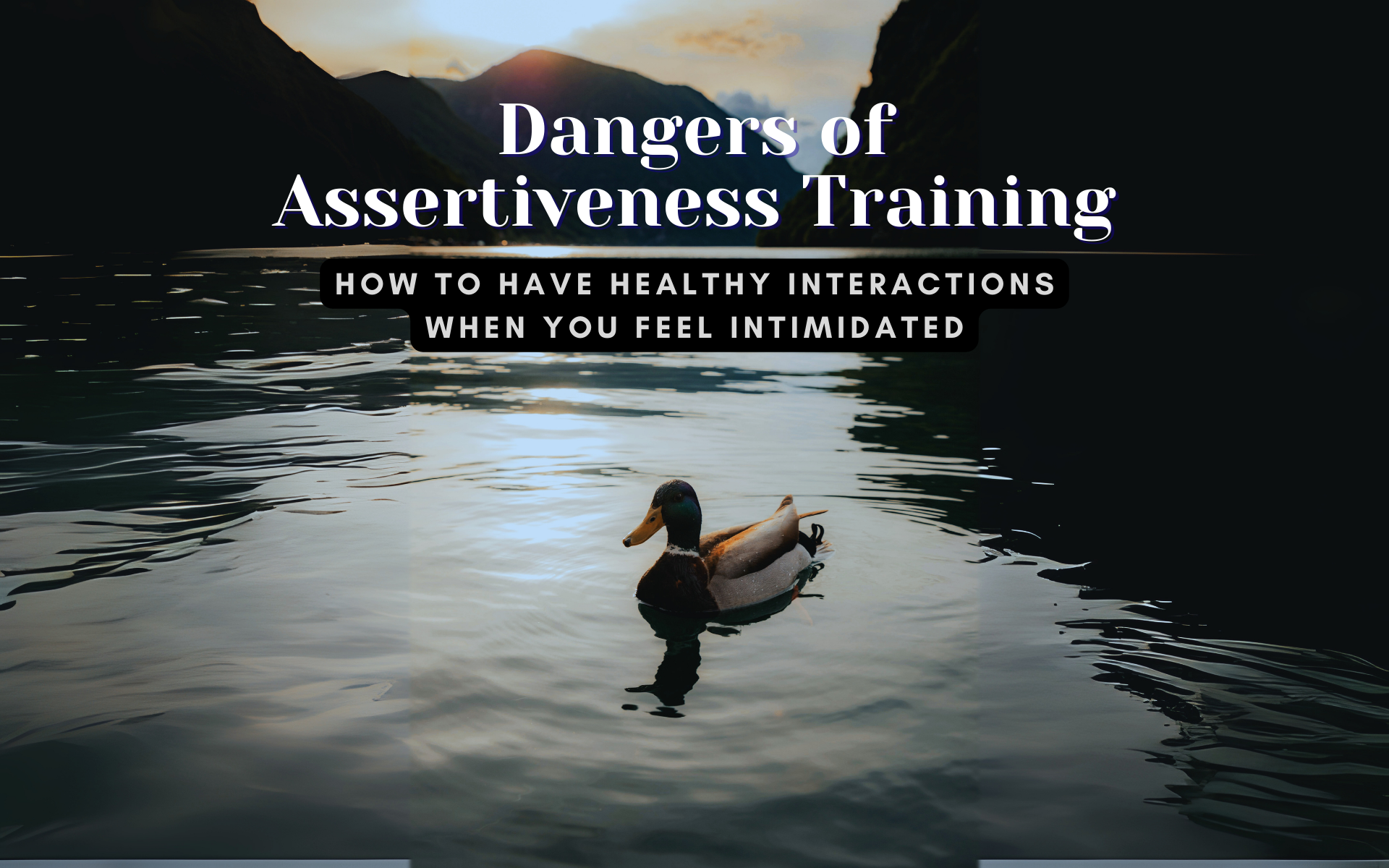
Like Water Off a Duck’s Back
I love nature and the lessons it teaches. Take ducks, for example. Their feathers naturally repel water, thanks to the oils they preen into their plumage. It’s a passive defense—nothing forced or reactive. This is how I see a surrendered, empathic, unselfish heart: it has a built-in protection from nastiness. We become naturally resilient when we focus on the other person—on how they feel—rather than on protecting ourselves.
So what does a duck need to stay dry and protected? Preening.
Ducks regularly take time to coat themselves in that protective oil. It’s a maintenance habit. For us, preening might look like self-care, spiritual practices, or mastering emotional tools like the 5 Secrets of Effective Communication. These prepare us to face hard situations without absorbing emotional “water.”
Ducks regularly take time to coat themselves in that protective oil. It’s a maintenance habit. For us, preening might look like self-care, spiritual practices, or mastering emotional tools like the 5 Secrets of Effective Communication. These prepare us to face hard situations without absorbing emotional “water.”
The Power of the 5 Secrets
I’ve found time and time again that when I use the 5 Secrets of Effective Communication (Disarming with truth, Thought & Feeling empathy, I feel statements, Stroking (saying something respectful or affirming of the other person), and Inquiry) with someone who’s being hurtful, they soften. They change. That’s why Dr. David Burns often does couples therapy with just one person—and why I and many of my colleagues have found that extremely effective with clients. When one person fully commits to change and takes ownership—whether or not it seems “fair”—the relationship usually shifts. Most of the time, the other person changes too.
But there’s a caveat:
The 5 Secrets take time and effort to master. They aren’t just a set of tricks. They’re a mindset shift that requires emotional maturity and lots of practice.
Example from my own life:
When I had that interaction with a bully years ago, I wasn’t a pro— just a teenager doing her best. But in hindsight, I used four of the five secrets. I missed the “I feel” statement, which might have opened the conversation even more.
Let me preface this story by saying I was just a teenager, trying to do the best I could with what I knew.
One day in high school, I was at my locker when a notorious bully—who’d already been in several fights—came up to me with a friend of hers. She waved brass knuckles in my face and said she’d heard I took karate and could break an arm. She wanted to fight me and see for herself.
I was shaking in my boots and I can’t recall my exact words, but it was something like:
“You’re right.” (Disarming Technique)
“I did take karate, and yes, I learned how to break an arm in a fight.” (Thought/Feeling Empathy)
“I can see you’re hurting.” (Feeling Empathy)
“And I want you to feel better.” (Stroking)
“If punching me will help, I’m okay with that. In fact, I’ll even turn the other cheek because I truly want to put you first.”
She was stunned but told me to meet her by the buses outside the school main doors at 3:00 PM. I agreed.
I was 100% sincere. And I showed up at 3 o’clock.
To my immense relief… she didn’t.
Later, she referred to me as “a friend,” and I never had another problem with her. I think she sensed that I genuinely cared and was not a threat to her.
And let me be honest—it was really hard to say what I did. I was anxious all day! But that experience taught me something invaluable: sometimes empathy is more powerful than self-protection.
Rethinking Assertiveness
The best kind of assertiveness isn’t about defending yourself or setting hard boundaries. It’s about being real, vulnerable, and willing to share a little piece of yourself—even when someone doesn’t deserve it.
For example, in the “I feel” statement of the 5 Secrets, people sometimes sneak in blame or defensiveness. Saying, “I feel hurt because you didn’t invite me to the party” sounds like an “I feel” statement, but it’s actually blame. A true “I feel” statement would be:
“I feel hurt and sad. I had really wanted to go to the party.”
No “you.” No blame.
This is key to avoiding the common pitfalls of defensiveness, self-protection, and blame. The word “you” has no place in a true “I feel” statement.
Assertiveness That Connects
While traditional assertiveness training teaches you to tell others what they did wrong and how they should change, I’ve found that approach rarely creates deeper connection or real resolution. It may feel good in the moment, but it often leads to more disconnection.
Ironically, the more clients listen and empathize—even with difficult people—the less conflict they have, and the more connected they feel. This is what I teach in my relationship workshops.
That said, assertiveness has its place. Healthy assertiveness is about being able to express yourself honestly, not to defend or control the other person, but to connect. I do think assertiveness training can be helpful for clients who struggle to speak up or don’t know how to express themselves. Often, it’s not a lack of will—it’s anxiety. In those cases, exposure techniques can be a big help in therapy.
Final Thoughts
So is assertiveness training dangerous? Not always—but it can backfire if it reinforces defensiveness or blame. True strength lies in empathy, vulnerability, and clarity. The kind of strength that doesn’t just protect you—it changes the dynamic.
If you want to learn how to master the 5 Secrets or get support in navigating challenging relationships, I offer relationship coaching and workshops based in these powerful tools.
Want to learn more about empathy-based communication and transforming difficult interactions?
👉 Visit my website for free resources and upcoming workshops: www.angelapoch.com


Related Post

-
March 6, 2026
Is Psychology Biblical? A Look at TEAM-CBT Have you ever wondered, how biblical is psychology? Specifically, how does a framework

-
December 3, 2025
Introduction We gravitate to things that follow our narrative (even if that is subconscious) if we are not using critical

-
November 25, 2025
I was listening to a podcast on the Japanese economy and the idea of “lack of desire,” as some put

-
October 28, 2025
In the previous blog The Truth About Adrenal Fatigue — and What You Can Do about it, we established the

Coaching, resources, and training for body, mind & soul using TEAM-CBT and/or Faith-based tools.
Useful Links


©2025. All Rights Reserved. Higher Path – Body Mind Health – Angela Poch