
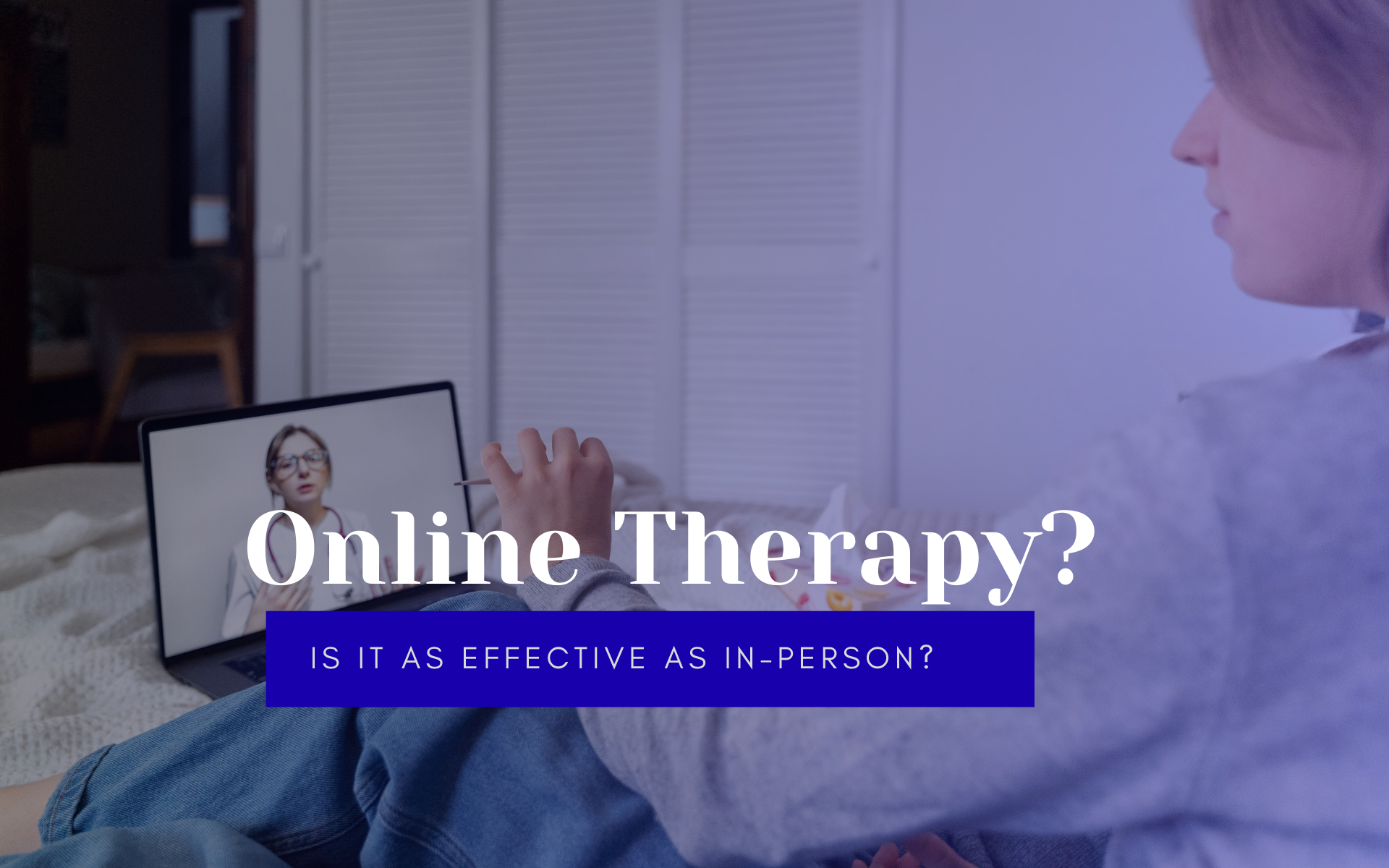
Is Online Therapy as Effective as In-Person?
-
By
-
August 12, 2025
Let’s face it—we live in the digital age. From social networking to buying groceries, the internet has become the go-to for information, advice, and a wide array of services and products.
I admit, I love technology. I’ve always been fascinated by cameras, gadgets, and, of course, the internet. But I also cherish an old-school, off-grid experience. I’m not entirely sure why I enjoy these two extremes, but I do. And I find that I appreciate both traditional in-person therapy and online therapy.
The reality is, online therapy, when using a video platform, is still face-to-face. Sure, there’s a screen in front of you, but you still observe facial expressions and other non-verbal communication—something you don’t get with phone or text-based counseling. That’s why it’s important to distinguish between the various forms of teletherapy when choosing an online therapist.
What the Research Says
Let’s look at some of the research on online versus traditional therapy and what the science says about its effectiveness:
“There was support for the application of psychotherapeutic interventions through the Internet; online therapy was especially effective for treating anxiety and stress—effects that lasted after therapy ended—and on average was as effective as face-to-face intervention.”¹
There are many pros to both modalities, and I wanted to share some of the research so you can see for yourself how effective online therapy can be. But I’ll also share some of the limitations.
Some of the Pros Are Pretty Obvious
✅ Availability
Clients can receive therapy without going anywhere. This alone offers many benefits. For instance, a client might be physically limited or housebound. They may live in a small town where therapists are scarce, or they might struggle to find time due to demanding work hours. With more flexibility in scheduling on the therapist’s part, this increases availability for clients. A therapist could offer weekend sessions without needing to commute or open an office.
✅ Confidentiality
Clients don’t run the risk of someone they know seeing them walk into a therapist’s office. This is especially helpful for professionals or people in small communities.
✅ Comforts of Home
One online therapist reported that clients actually felt more comfortable sharing vulnerable issues because they were in a familiar setting—their own home.² They felt they could relax and truly express what was on their minds.
✅ Flexibility & Convenience
As mentioned, not having to commute makes it easier for clients to book and attend therapy. Whether they’re a parent with small children or someone working long hours, the convenience opens the door for those who might not otherwise be able to access therapy.
✅ Opportunity & Specificity
Clients can find therapists who are a better match for their specific needs. For instance, someone might seek out a therapist who understands depression and also shares their faith background. Both therapist and client can be more intentional in choosing to work together. Clients aren’t limited to the few local therapists in their area—they can search widely for professionals with the right expertise and therapeutic style.
I’ve had clients come to me because they wanted a Christian therapist who was also well-versed in cognitive behavioral therapy for relationship issues. That’s pretty specific!
While this last point is a major benefit, I’m not including it in the bullet points above because it’s not exclusive to online therapy. Also, not all online therapists test their clients, so effectiveness might not always be measurable. However, competition—along with ratings and reviews—can lead to improved outcomes. Ratings are often easier to find for online therapists, and many are learning they need to demonstrate effectiveness to stand out.
Some companies are even working on platforms that rate therapists based on client progress reports. Although this may be a while from becoming the norm, I believe it will eventually become a standard of care.
While many studies report traditional therapy is about 50% effective, therapists who track client progress with some form of outcome measurement tend to be much more effective. They can identify what’s not working and adjust accordingly.
Some of my colleagues even offer a money-back guarantee because they haven’t had a client fail to make progress. That’s not to say good therapy can cure all mental illness—but there should be noticeable improvement. If not, the therapist should be honest and refer the client to someone more qualified for their specific needs.
What About the Limitations of Online Therapy?
Some drawbacks are fairly obvious. First, you need a stable internet connection. Even with that, tech glitches still happen—frozen video, software bugs, audio issues, and more. Clients who aren’t tech-savvy may find it frustrating to figure out their camera, microphone, or complete online tasks like filling out forms and surveys.
There are also legal considerations. Just as in face-to-face therapy, therapists and clients must follow laws regarding licensure, which often depend on both parties’ locations.
Another concern is confidentiality—especially if the client’s email or device isn’t secure. Many people share devices with family members, making it possible for sensitive information to be accessed. For this reason, many online therapists avoid using email altogether, opting instead for secure platforms. Others, like myself, inform clients of potential privacy risks and recommend using a private email address for all communication.
Lastly, online therapy is not appropriate for everyone. Individuals who are suicidal or need physical intervention (such as those with severe addictions, active psychosis, or serious eating disorders) should be treated in an appropriate facility.
Final Thoughts
Of course, I’m writing this from a biased perspective—I’m an online therapist. But I truly find online therapy easy to use with my clients. And since I’ve been the tech support in my household for years, I don’t mind helping clients learn the technology either.
For me, it’s been a great opportunity to provide services to people near and far. If you’d like to give online therapy a try, I offer a free 15-minute consultation. You can check it out on my website:
Sources:
- https://www.ncbi.nlm.nih.gov/pubmedhealth/PMH0026877/
- https://www.goodtherapy.org/blog/confessions-of-virtual-therapist-pros-cons-of-online-therapy-0719174
- http://www.sciencedaily.com/releases/2015/11/151102125440.htm
- https://www.ncbi.nlm.nih.gov/pmc/articles/PMC5659300/


Related Post

-
March 6, 2026
Is Psychology Biblical? A Look at TEAM-CBT Have you ever wondered, how biblical is psychology? Specifically, how does a framework

-
December 3, 2025
Introduction We gravitate to things that follow our narrative (even if that is subconscious) if we are not using critical

-
November 25, 2025
I was listening to a podcast on the Japanese economy and the idea of “lack of desire,” as some put

-
October 28, 2025
In the previous blog The Truth About Adrenal Fatigue — and What You Can Do about it, we established the

Coaching, resources, and training for body, mind & soul using TEAM-CBT and/or Faith-based tools.
Useful Links


©2025. All Rights Reserved. Higher Path – Body Mind Health – Angela Poch